


Smoother School Mornings: Helping Kids (and Parents!) Find Calm


Now that children are well and truly back into school, many parents might expect to breathe a collective sigh of relief as routines and normality are restored. But as any parent knows, it’s not always that simple.
For some children, adjusting back into the school routine—especially in the mornings—can take time. This often leads to stress, tension, and even morning standoffs that affect the whole household. In my years of teaching, I’ve spoken to countless parents worried about their child being late because they drag their feet, or at their wits’ end because every morning feels like a battle.
The good news? With a few simple strategies, mornings can run much more smoothly.
1. Routine and Ownership
After the lazy mornings of summer, it’s easy for routines to slip. But re-establishing a predictable routine is one of the most effective ways to bring calm back to mornings.
The key is ownership. Children are much more likely to follow routines if they’ve had a say in creating them. Take time, when everyone is calm, to sit down as a family and talk through why certain things need to happen before school. Encourage your child to help plan their morning the night before.
A few simple strategies include:
Using a visual chart for the morning routine, similar to the one below.
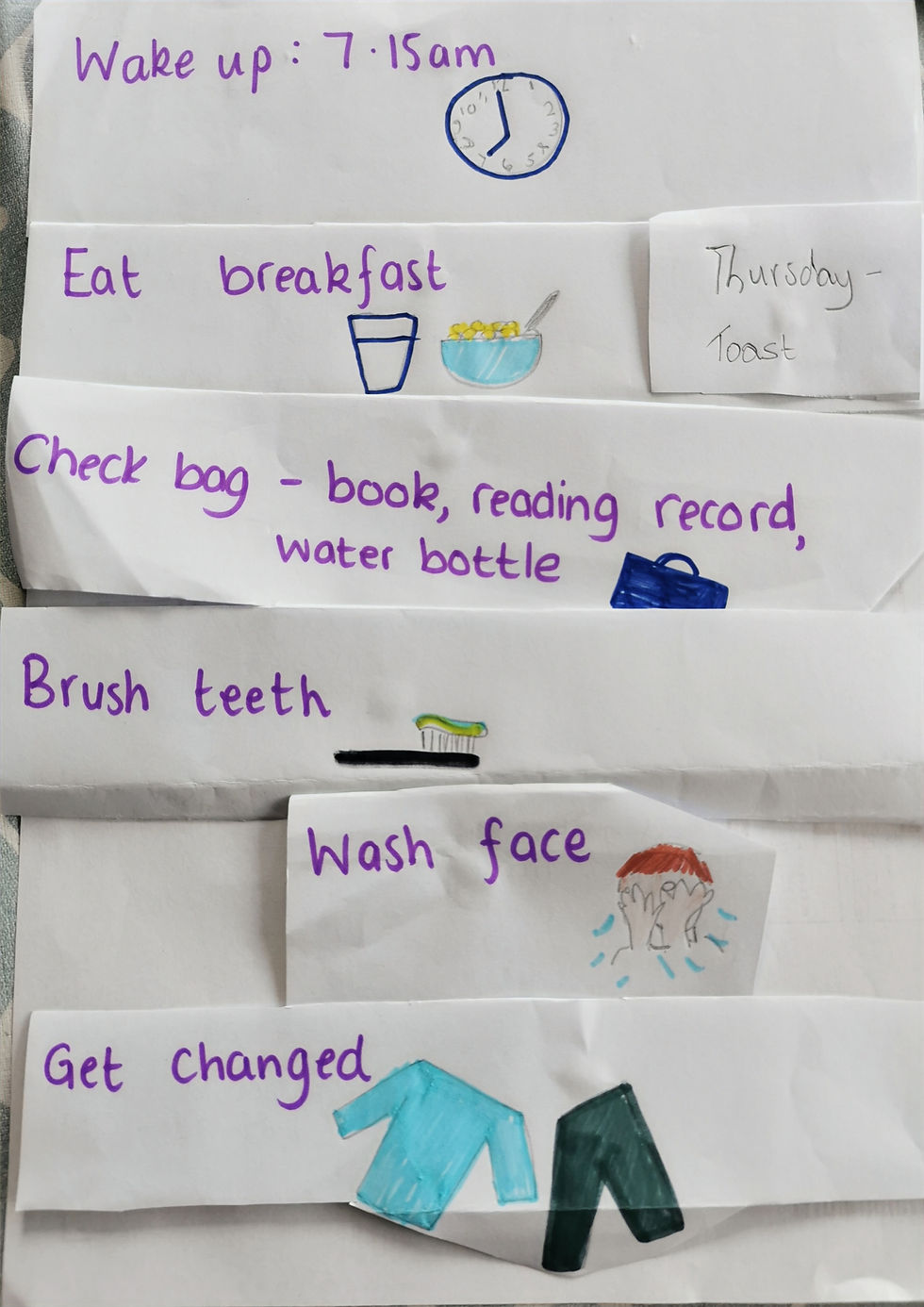
Offering small choices like “Do you want to get dressed first, or eat breakfast first?” This makes children feel heard, validated and ultimately more cooperative.
Encouarging your child to choose their breakfast the night before to avoid delays in the morning.
For some, a reward system can be helpful. Start small and make it manageable — one smooth morning could mean extra time playing a game with Mum or Dad in the evening.
2. Family Rules to Support Routine
Linking routines to clear, agreed family rules can strengthen their impact. These rules should apply to everyone in the household, so children feel a sense of fairness and belonging.
For example:
Everyone sets their own alarm and gets up when it goes off.
Everyone lays out their uniform the night before.
Everyone clears their own breakfast dishes.
This way, if routines aren’t followed, a calm reminder like, “In our house, we put our own dishes in the sink,” reinforces both the rule and the sense of shared responsibility.
3. Regulation Techniques for When Emotions Rise
Even with the best routines, mornings can still bring big feelings. Having a few calming techniques at hand makes a big difference.
Deep Breathing
“Smell the flower, blow out the candle”: Inhale like you’re smelling a flower, exhale like you’re blowing out a candle.
Bubble breathing: Pretend to blow bubbles with long, slow breaths.
Breathing helps calm the nervous system and gives kids a chance to reset.
Visualisation and Imagination
Safe place visualisation: Guide your child to close their eyes and imagine a calm, happy place.
Colour breathing: Inhale a calming colour (like blue or green), exhale a stress colour (like red or grey).
These imaginative exercises help children shift from stress to calm quickly.
4. The Night Before: Setting Up for Success
A calm morning usually begins the night before. A predictable, relaxed bedtime routine gives children the best chance of waking up refreshed and ready.
One important step? Turning off screens an hour before bed. Blue light and stimulating games or videos can keep children’s minds buzzing, making it harder for them to fall asleep. Instead, choose calming activities:
Colouring or doodling
Reading a bedtime story
Listening to a children’s podcast (a favorite in my house is Animal Tales, with gentle 15-minute stories)
Using a personalised bedtime recording that guides your child into relaxation, something which I provide for all my clients (children and adults alike!)
When children go to bed calm, they wake up better prepared to face the morning—and so do parents.
Final Thoughts
Mornings don’t have to feel like a battlefield. By creating routines children feel ownership over, setting clear family rules, having calming techniques ready, and setting up bedtime well, parents can transform mornings into a smoother, calmer start to the day.
It won’t always be perfect—but with consistency, the difference can be remarkable.


